Valencia Tourist Card Guide (24/48/72h): Is It Worth It?
Understand exactly when the Valencia Tourist Card pays off, what is included, and how to plan your days around transport and attractions.
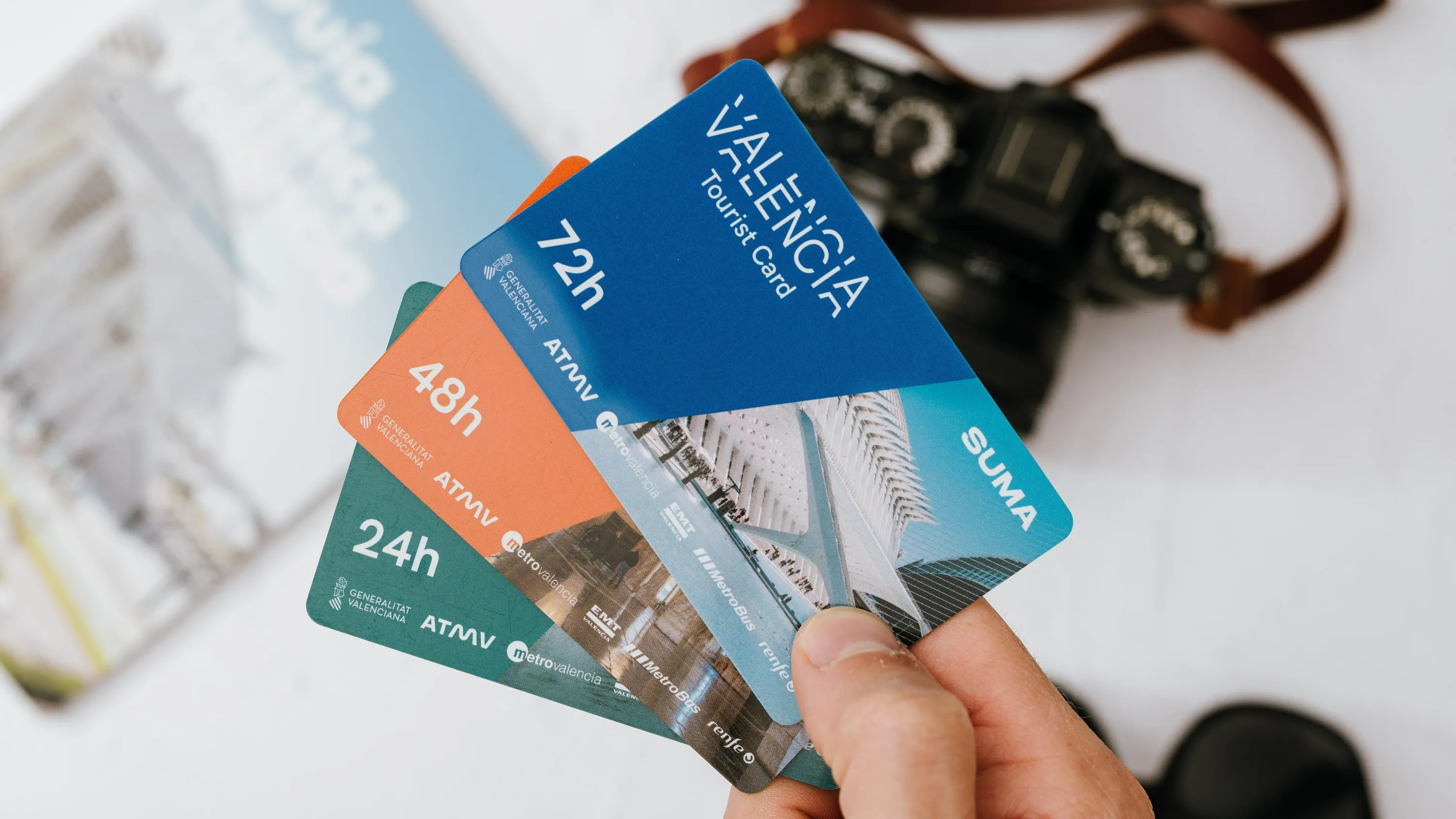
By the time your train glides into Valencia, the city is already giving you choices: old stones or science-fiction architecture, beach breeze or market lanes, museum calm or festival noise. The Valencia Tourist Card is less a discount gimmick and more a rhythm tool — if you use it with intention.
What the card changes
You stop calculating each small move.
- Metro to the center ✅
- Bus to an attraction ✅
- Museum stop between lunch and sunset ✅
The biggest hidden value is not only savings. It is decision speed.
24h vs 48h vs 72h (quick rule)
| Card | Best for | Typical pace |
|---|---|---|
| 24h | One intense day | 3-4 paid entries + transport |
| 48h | Weekend trip | 5-7 entries + multiple districts |
| 72h | Slow explorers | Museums + beach + old town balance |
A realistic first-day blueprint
- Start in Ciutat Vella for the Cathedral area.
- Continue to La Lonja and nearby lanes.
- Break at Mercado de Colón.
- Finish around City of Arts and Sciences at golden hour.
Pro move: Start your card when your first paid visit begins
If you arrive late morning, do a free walk first, activate the card only when entering your first paid venue, and preserve prime hours for the next day.
Bottom line
If your trip includes transport + culture (not only beach), the card usually wins. Think of it as your mobility + museum backbone, then improvise around food, weather, and mood.
A traveler's scene, hour by hour
You step out of the station with a backpack, a half-charged phone, and a long list of places that all seem urgent. The card helps you trade urgency for flow. Instead of asking "Can I afford one more stop?" you start asking "What story do I want this day to tell?"
By late afternoon, that distinction matters. You are less tired from decisions, more present in places, and more willing to follow spontaneous detours.
Practical pacing model
| Energy level | Best move | Why it works |
|---|---|---|
| High (morning) | Major landmark + first entry | Focus is strongest early |
| Medium (midday) | Food stop + short transfer | Recovery without losing momentum |
| Lower (late day) | Scenic walk + optional museum | Soft landing before dinner |
Smart traveler checklist
- Activate card only at first paid stop
- Save one backup indoor attraction
- Keep dinner zone connected to return transport
- Leave 45 minutes unplanned for serendipity
Travel quality often equals: fewer micro-decisions + better timing + room for surprise.
A final evening scene in Valencia
When the day winds down, you realize the card's best gift was not only price efficiency but narrative continuity: less interruption, more immersion. You moved from stone arcades to modern lines without ever feeling pulled out of the story.
If you want to optimize tomorrow
- Start from the district you ended in tonight
- Keep one anchor attraction and two flexible add-ons
- Reserve your final hour for wandering, not checking boxes
Day-two momentum, not just more checkboxes
On your second day, Valencia feels different. You already recognize the cadence of its streets, and that familiarity reduces friction. Use that confidence to design a better flow: one anchor stop, one connective break, one atmospheric finish.
The real upgrade is narrative continuity. Instead of "doing more," you start composing the trip so each district answers the previous one.
Sobre el autor

Valencia Travel Desk
Esta guía se ha creado para explicar la Valencia City Card de forma práctica y humana, más allá de frases promocionales, para que tomes decisiones con confianza y disfrutes mejor tu viaje.
Tags
Comments (0)
Loading comments...